Staging & Preparation
Rack Assembly, Equipment Labeling & Device Configuration
Equipment is assembled, identified, configured, and checked in a controlled environment before the field crew arrives.
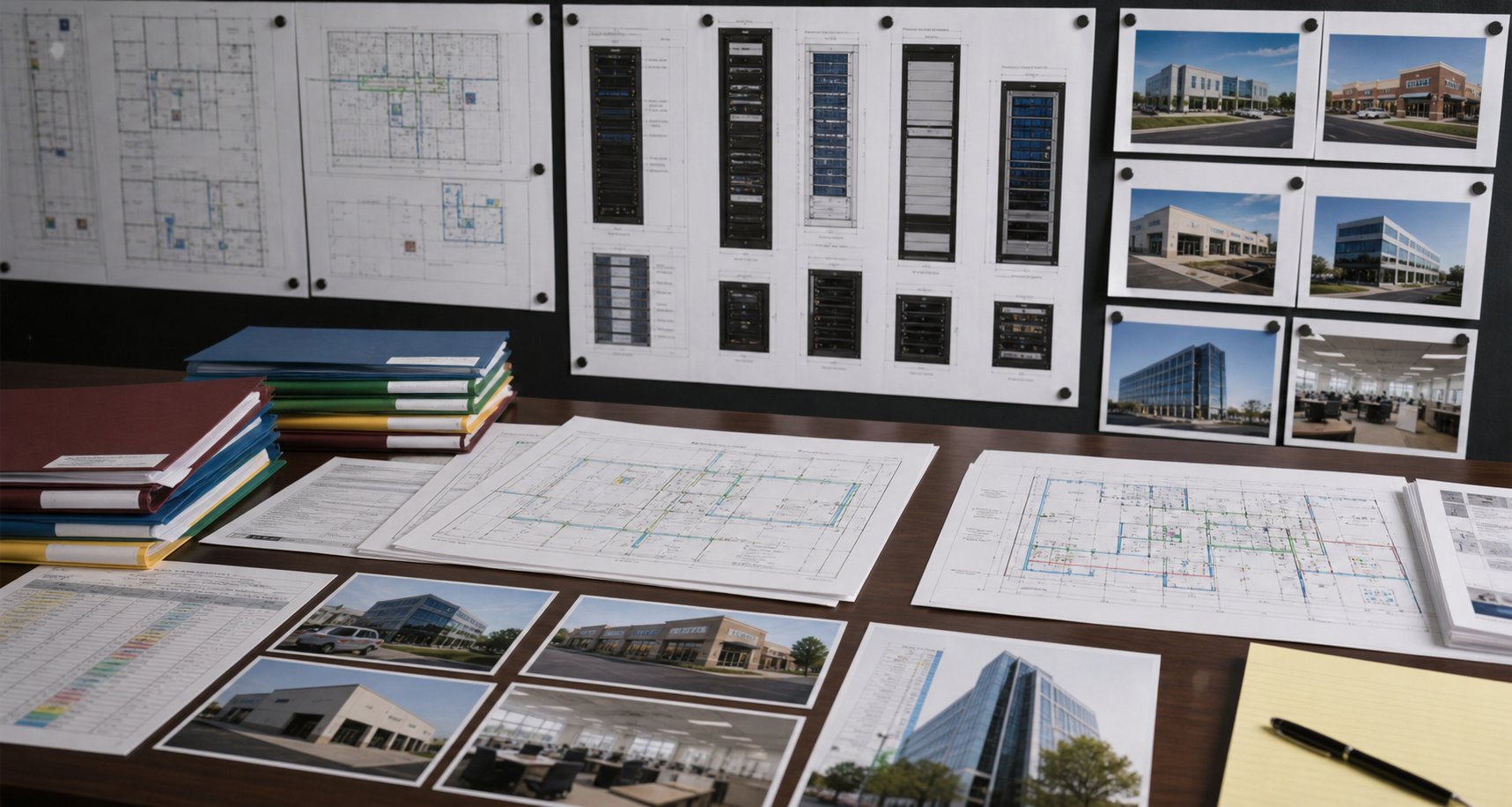
Equipment staging is the preparation work that happens before the installation crew arrives at the commercial job site. For a structured cabling project at a new Southern California retail location or corporate office, staging might mean pre-labeling patch panels to match the location's cabling scheme, pre-building rack assemblies with cable management hardware, organizing material kits by IDF closet location, or pre-cutting conduit sections to minimize time spent on site during a compressed construction schedule. For network device deployments — switch stacks, wireless controller setups, access point configurations — staging means pre-configuring hardware in a controlled environment where configuration mistakes are easy to catch and correct before anything is mounted to a wall or installed in a rack at a live commercial facility.
Staging is especially valuable for multi-location commercial rollouts throughout Southern California, where consistency from site to site is critical. When a retail chain is opening new locations across the Inland Empire, the San Gabriel Valley, and Los Angeles County on overlapping construction timelines, having each rack assembly and hardware kit leave the staging environment already built, verified, and labeled to spec means the field installation at each location becomes a deployment — faster, cleaner, and far less susceptible to site-to-site variation that creates inconsistency across the portfolio. Our technicians document every staged unit, so there's a clear record of what was configured, to what spec, and when — a record that matters when something needs to be replicated or troubleshot months later.
We coordinate staging schedules around the construction timelines and delivery windows of your specific Southern California locations, so equipment arrives at each site ready when the installation crew needs it rather than sitting on a jobsite floor waiting for configuration work that should have happened before it shipped. This logistical coordination is what separates a professionally managed commercial low-voltage rollout from one where the field crew is constantly waiting on unfinished equipment.